🌍 Worldwide Shipping — Custom Gear Delivered Right to Your Doorstep

10 Fun Facts About Cricket Balls and Tennis Balls You Never Knew Before
Blog post description.
CRICKET BALLS
10/23/20255 min read
Introduction: The Hidden Science Behind Every Bounce
Cricket balls and tennis balls, among others, are the very recognizable sports accessories. Be it the loud and powerful sound of a cricket bat striking the ball or the elegant and smooth bouncing of the tennis ball, these balls have all been created with precision, science, and skillful hands.
Have you ever thought about their uniqueness? What are the different ways they are made? What gives them that ideal bounce or spin?
We will take a tour in this article of 10 amusing and astonishing facts regarding cricket balls and tennis balls. There will be a discussion of their design, evolution, and differences, which would be nice to know. Besides, we will let you know why the Odyda brand is considered reliable with its high-quality sports balls that meet the standards of performance, durability, and enjoyment.
1. Cricket Balls Are Handcrafted, Not Machine-Made
One of the most intriguing things about cricket balls is that they are not made by machines, but they are made by expert artisans.
The process of making each cricket ball involves stitching four leather pieces, then the cork core, and finally wrapping it with tightly wound string. The masterly hand-stitching decides to what extent the ball will swing, spin, and again, how long it will last during a game.
Odyda’s Advantage:
Odyda's top-quality cricket balls are meticulously hand-stitched to ensure uniformity in terms of weight, balance, and durability, which provides the players with a higher level of control and performance that lasts.
2. The Red vs. White Cricket Ball Debate
Among cricket lovers, there is a kind of discussion going on regarding red and white balls, and yes, the difference is beyond mere color.
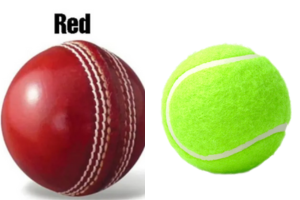
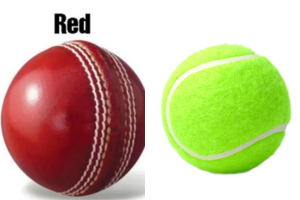
Test matches make use of red balls because they are durable and can be seen easily in the daytime.
White balls are reserved for One Day Internationals (ODIs) and T20 games as they are the easiest to see when there is a blackout.
On the other hand, white balls are more likely to lose their shine quickly than red balls may last longer; this has an impact on swing and movement.
Fun Fact:
The modern advent of the pink cricket ball has made it possible for day-night Test matches to be played, as it retains the same visibility in sunlight and artificial light.
3. Tennis Balls Were White — Not Yellow!
Present-day tennis balls are no doubt the bright neon yellow ones, but the bright color wasn’t always the case.
Initially, tennis balls were white and made from cloth-covered rubber. The yellow switch happened during the 1970s when research showed that yellow balls were more visible on television.
Odyda’s Edge:
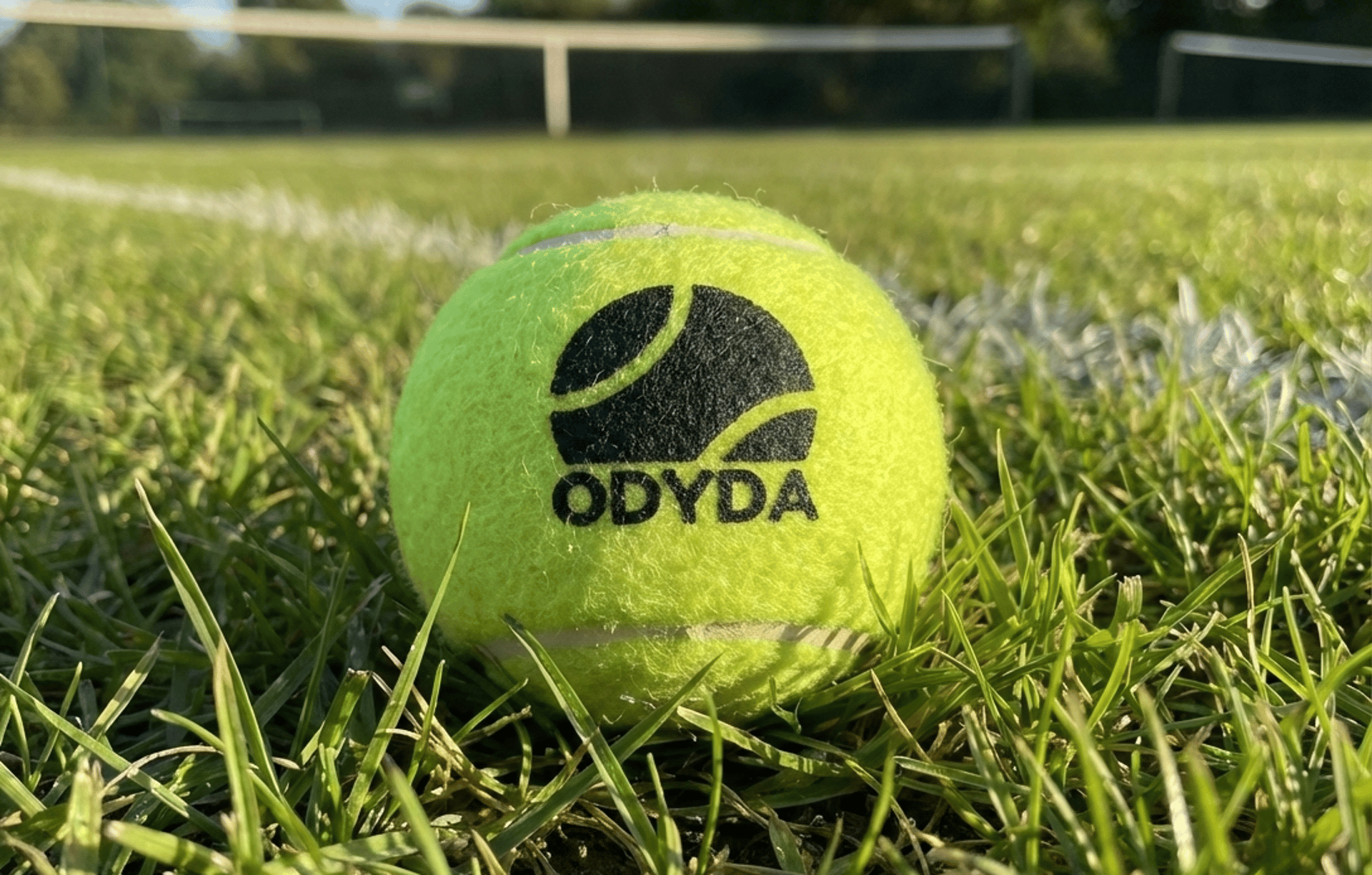
Odyda’s tennis balls come with a highly visible neon felt that enlarges visibility on every court—the surface may be clay or grass—while providing a reliable bounce and spin.
4. Cricket Balls Can Swing—Thanks to Physics!
One of cricket’s most exciting enigmas is the swing of the ball that, when presented in the air, does so in an unpredictable manner.
The swing is a function of the situation of the seam and the ball’s aerodynamics. A bowler smoothens one side and makes the other side rough, thus enabling air to move fast on one side and thereby causing the ball to move sideways.
Science in Action:
The normal swing is done with a shiny new ball.
The reverse swing occurs with an older, worn-out ball — a technique used by fast bowlers to outsmart batsmen.
Odyda ensures that the cricket balls it produces have a strong seam and a well-balanced structure that allows both swing and spin techniques to be used.
5. Tennis Balls Are Pressurized to Maintain Bounce
Every tennis ball is filled with compressed air. The core under pressure gives the ball the bounce and speed required for fast-paced and active rallies.
After the ball is unsealed from the can, it slowly loses pressure, which is one of the reasons why professional players often replace the balls after every few games.
Pro Tip:
If your tennis balls lose their bounce, put them in a pressurized ball saver to lengthen their life — or just switch to Odyda's long-lasting tennis balls, which have been specially made for superior air retention and durability.
6. Cricket Balls Get Hard and Tennis Balls Get Soft with Age
Cricket and tennis balls go through opposite aging changes:
Cricket balls get harder and shinier with playing, thus, they are harder to hit.
In contrast, tennis balls lose their air and become softer, which leads to less bounce and slower speed.
So, this is the opposite case in the two sports where bowlers in cricket like an older ball to facilitate reverse swing, while players in tennis want fresh balls for maximum bounce.
Odyda’s Promise:
Every Odyda ball is made to last — whether it is a cricket ball with the durable outer layer or a tennis ball with the high-quality felt, longevity is always considered the highest priority.
7. The Temperature Affects the Performance of Both Balls
The temperature has a huge effect on the behavior of cricket and tennis balls.
In a cold environment, the balls turn harder and lose bounce.
On the other hand, in a hot environment, the air inside expands, thus resulting in bouncier and faster balls.
This is also the reason why professional players change their strategies according to the weather — and why Odyda makes its balls so that they can be used under any weather and still perform consistently.
8. Tennis Balls Have Been to Space!
Believe it or not, at one time, tennis balls were launched into space. NASA performed its zero-gravity tests using the balls, and the tests determined the motion and bounce of the objects there without the impact of gravity.
The outcomes supported the research and provided proof on the behavior of objects in space—the demonstration that even sporting goods can be of scientific value!
9. Cricket Balls Have a Secret Layered Design
A common misconception about cricket balls is that they are simply leather encasing cork, which is not quite true.
A cricket ball is made up of:
Cork Core – The part that gives the ball bounce.
Wound String Layers – They contribute strength and elasticity.
Leather Cover – It ensures grip and durability.
Prominent Seam – It is very important for swing and spin.
Every layer has to be in perfect alignment so that the ball can go straight.
Odyda’s Craftsmanship:
Odyda takes the best quality leather and uses the best quality string to manufacture cricket balls that comply with the professional standards for roundness quality and flight stability are perfectly.
10. Both Balls Have Changed Materials Over Time
In the past, cricket balls were made with animal hides and hand-rolled cork, while tennis balls were made with stuffed cloth and wool.
Now, both the balls are made with synthetic leather, vulcanized rubber, and felt, which are advanced materials providing better bounce, control, and weather resistance.
Odyda’s Innovation:
Odyda is always on the lookout for new materials that are better environment to make modern sports balls that have increased performance and durability for practicing and professional play.
Bonus Fact: Tennis Balls Are Tested for Precision
The International Tennis Federation (ITF) checks tennis balls before they are allowed for professional use.
Each ball, then, is to pass the exact standards for:
Weight: 56 grams to 59.4 grams
Diameter: 6.54 cm to 6.86 cm
Bounce Height: 135 cm to 147 cm
Also Read:
Top Benefits of Tennis Balls You Never Knew Before
Why Dog Balls Are the Best Toys for Active Dogs